
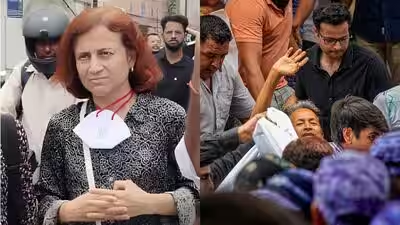
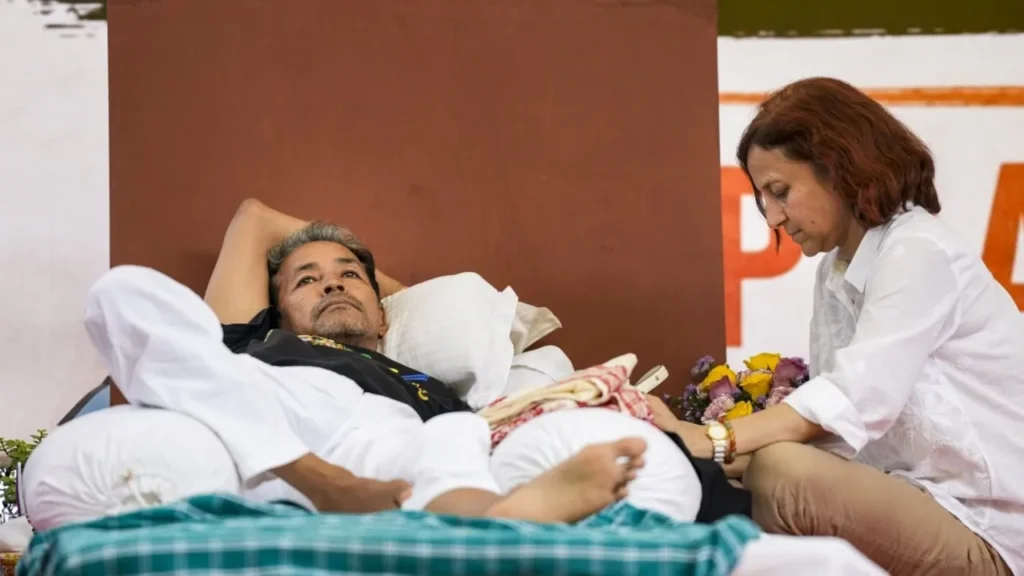
Sonam Wangchuk and his wife Gitanjali Angmo. Here’s a man who has spent years dreaming up ways to help his Himalayan community survive—building ice stupas that store water for farmers, inspiring millions through his work and even a bit of Bollywood magic in 3 Idiots —now lying weak in a hospital bed after weeks of refusing food. And beside him, his wife is moving heaven and earth, including the Delhi High Court, because she just wants what’s right for the man she loves.
Sonam started this hunger strike back at the end of June 2026 at Delhi’s Jantar Mantar. He joined hands with young protesters from the Cockroach Janta Party who are fed up—deeply, painfully fed up—with the mess in our education system. Paper leaks in NEET and other big exams have ruined futures left and right. Kids study for years, families go broke on coaching, and then everything collapses because of leaks, corruption, soaring costs, and the quiet tragedy of student suicides. They wanted the Education Minister to take responsibility. Sonam added his voice for Ladakh too, pushing for real constitutional protections so his people aren’t left behind. It wasn’t some dramatic stunt.
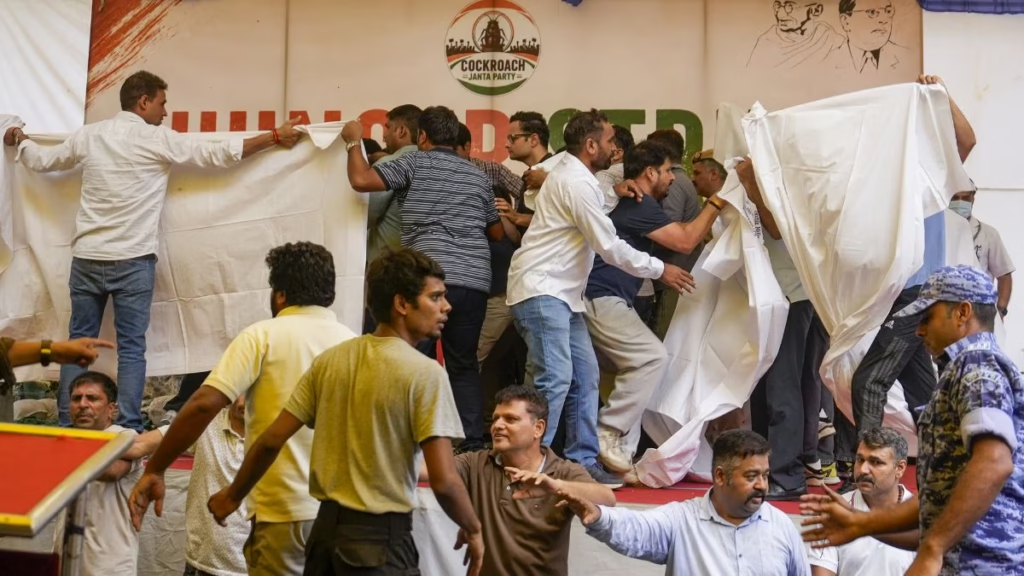
By the time three weeks had passed, his body was paying the price. On July 18, police moved him to Safdarjung Hospital. Officials said it was necessary—his vitals were dropping, doctors were worried, and courts had earlier asked for close monitoring to protect his life. But for his supporters, it felt like the protest was being shut down right before a big march to Parliament planned for July 20. They called it forceful, unnecessary. Opposition voices spoke up loudly against it. And through all the chaos, Gitanjali Angmo stood there, trying to hold onto clarity and dignity for her husband.
Gitanjali isn’t someone who courts the cameras. She’s a social entrepreneur, an educator who co-founded the Himalayan Institute of Alternatives with Sonam. Together they’ve worked on real, ground-level change in tough terrains. But now she’s at the hospital, speaking plainly and firmly. She says Sonam was doing okay the day before they took him. She’s insisting—no treatment, nothing by mouth or through veins—without her consent, the family’s, and the input of the doctors who’d been watching over him during the fast. She’s worried about transparency, about not getting full medical reports, about restrictions even on carrying her phone in.
Gitanjali is pushing to have Sonam shifted from Safdarjung to somewhere else—maybe a private hospital—where she feels there can be more trust, more openness, and real family involvement. It’s not about rejecting care. It’s about making sure the care respects his wishes, their shared values, and doesn’t feel like another layer of control. In messages coming out, Sonam himself sounds unbroken in spirit. He talked about this as part of a bigger “second freedom movement”—freedom from the fear and injustice that’s weighing down so many young people today. Even from the hospital, his voice carries through her.
This whole thing feels bigger than one man’s health. It’s touching something raw in so many Indian families. How many parents lie awake worrying about their child’s exam results, knowing one leak or one unfair twist can derail everything? The anger isn’t abstract. It’s about lost years, mounting debts, crushed dreams, and a system that keeps failing the next generation. Sonam’s decision to fast wasn’t easy—I’m sure Gitanjali tried talking sense into him, as any loving partner would.
The protests aren’t stopping. Other voices are stepping up with their own fasts. The march is still on. People across cities are watching, talking, sharing. Some support the cause fully; others question the methods or timing. But almost everyone seems to agree on one thing: we need real fixes, not just temporary quieting of voices. Dialogue from the top would go a long way instead of letting things reach this point.
In quieter moments, you wonder about the personal side. What does it do to a marriage when one person chooses such an extreme path for the greater good? Gitanjali’s strength in these days—speaking out clearly, standing at the hospital, approaching the courts—shows a partnership built on deep respect and shared purpose. She’s not just fighting for her husband’s well-being; she’s fighting to keep the meaning of his protest alive.
India has seen hunger strikes before. They’re part of our history of peaceful resistance. But each one carries its own human cost—the worry in the eyes of family members, the uncertainty, the hope that it leads somewhere better. Right now, for Gitanjali and Sonam, that cost is immediate and intimate. Whatever happens in court, whatever the coming days bring, I hope it brings some healing, some listening, and some genuine steps toward the fairer education system and regional justice they’re asking for.
Because at the end of the day, behind every big protest is a person someone loves dearly. And behind every court plea is a wife who just wants her husband treated with the dignity he fought so hard to protect for others.
Sources:
Indian Express, The Hindu, Reuters, NYT reports from mid-July 2026; PTI statements from Gitanjali Angmo; updates from Cockroach Janta Party and court proceedings coverage.
@Rohit Manral