It wasn’t some dry political drama that only insiders care about. This was one of those afternoons where you could feel the weight of real frustrations hanging in the humid air – students losing sleep over exams, families worried about their kids’ futures, and ordinary folks wondering if their vote will even count next time.
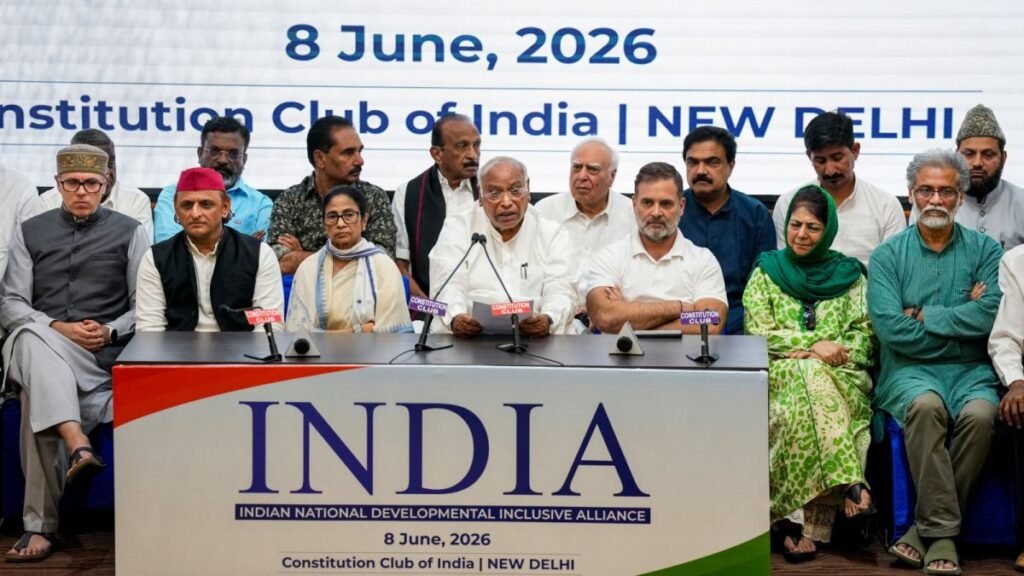
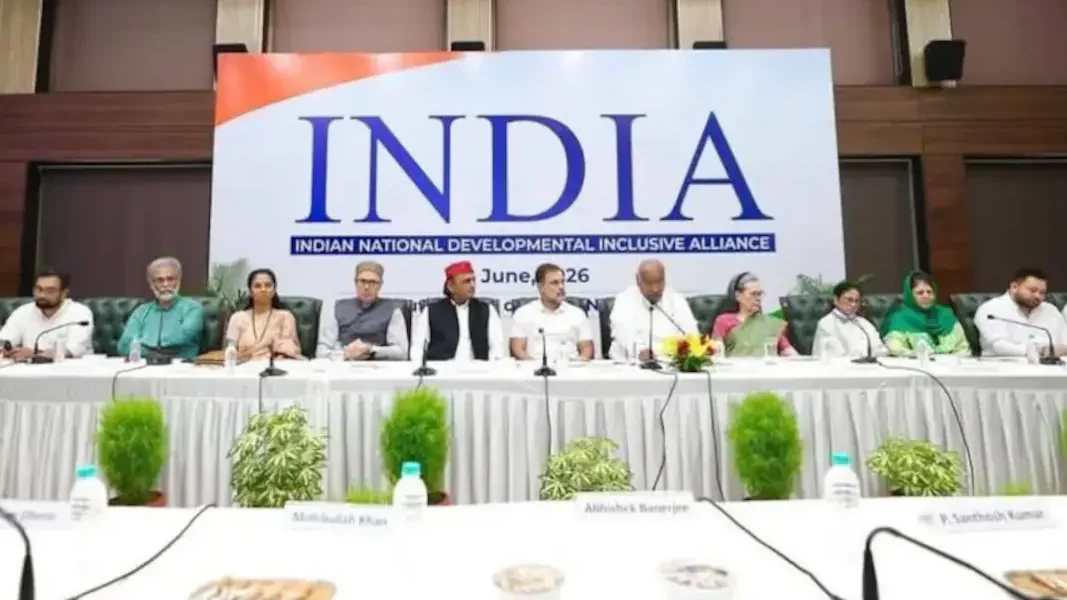
Inside the Constitution Club, leaders from almost two dozen opposition parties under the INDIA bloc umbrella sat down, talked it out, sometimes passionately, and walked out with a clear plan. Five points they all agreed on. No vague promises this time – at least that’s how it sounded when Mallikarjun Kharge faced the media later.
You know how these meetings often go – lots of speeches, photo-ops, and then everyone goes their own way. But today felt a bit different. Congress chief Kharge, Sonia Gandhi, Rahul Gandhi, Mamata Banerjee, and others from parties like Samajwadi, RJD, Trinamool, Left, and more – they were all there hashing things out.
AAP and DMK skipped it, but the rest showed up strong. By the end, they had consensus on some pretty direct actions. And the two headlines grabbing attention? A formal letter heading to the Chief Justice of India and a straight-up demand for Education Minister Dharmendra Pradhan to resign.
The First Big Decision – Letter to the Chief Justice of India
First, that letter to the CJI. The opposition is really worked up about the Special Intensive Revision of electoral rolls. They’re calling it potential “vote loot” – arbitrary deletions and changes that could mess with millions of voters, especially in states like Bihar and West Bengal.
They’ve seen what they believe are unfair moves, and they don’t want to leave it to chance. So, a joint letter is going to the top judge soon, asking for the court’s eye on it to protect the democratic process. It’s not everyday opposition talk; it feels like they’re saying the system itself needs guarding.
Demand for Education Minister Dharmendra Pradhan’s Resignation
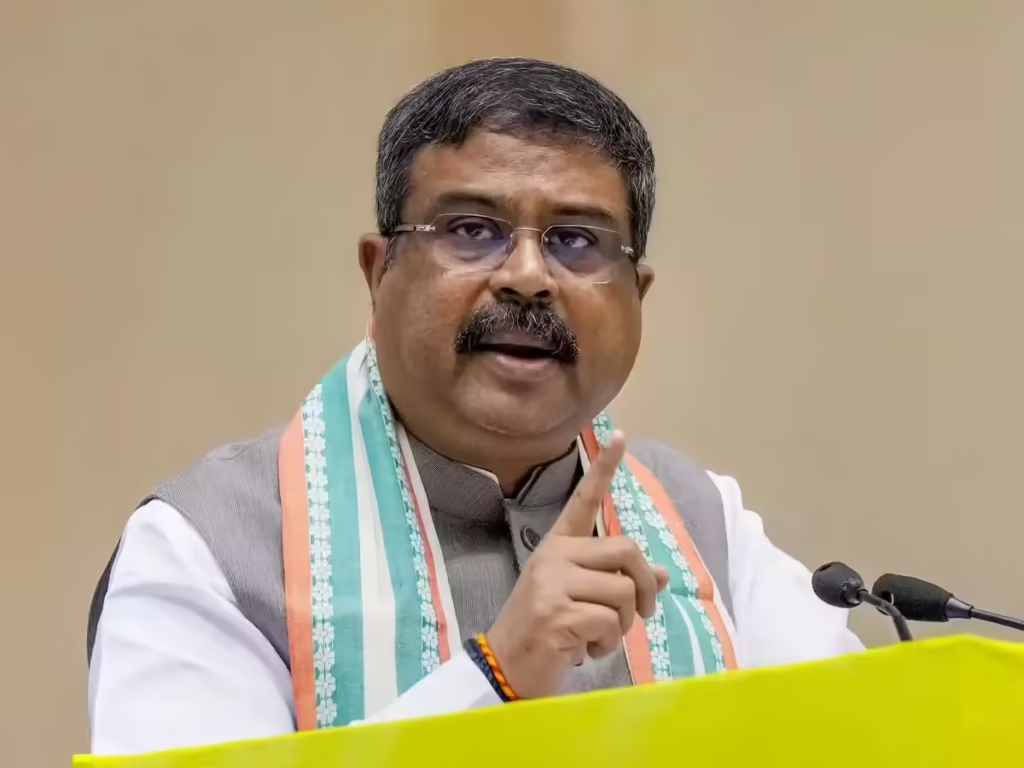
Second, and this one hits home for lakhs of young people and their parents – they want Dharmendra Pradhan out as Education Minister.
The NEET-UG mess this year has been heartbreaking. Paper leaks, last-minute chaos, cancellations, re-tests… students who poured in months, sometimes years, of hard work are devastated. Parents are angry, teachers are frustrated, and the whole competitive exam system looks shaky.
Kharge didn’t mince words: he said the minister has let down the youth badly. It’s not just politics for show. When your child’s future feels gambled with, you want accountability. Resignation demands like this are common, but the anger bubbling up from the streets makes this one feel urgent.
The Other Three Key Decisions of the INDIA Bloc
The other three points round out their strategy.
All-Party Meeting on the Economy
Third, they want an all-party meeting on the economy. Unemployment, rising prices, farmers’ struggles, the gap between shining GDP numbers and what people actually feel in their pockets – these aren’t going away.
The bloc thinks the government should sit down with everyone instead of just putting out positive spins. It’s a call for honest conversation on real issues affecting daily life.
Stronger Coordination Within the INDIA Bloc
Fourth, they agreed to tighten coordination inside the INDIA bloc itself. More regular huddles, better sharing of ground reports from different states, and presenting a truly united face in Parliament and outside.
Several leaders apparently stressed that unity isn’t optional anymore. Congress is playing the role of holding it together, but regional heavyweights like Mamata and Akhilesh bring their own fire and local insights.
Continued Protests and Parliamentary Pressure
And fifth, a commitment to fight these battles hard – through protests, strong interventions in the upcoming monsoon session of Parliament, and reaching out directly to people.
No one left thinking the job was done. This is meant to be the start of sustained pressure.
Why These Issues Matter to Ordinary Citizens
Think about the backdrop for a minute. The NEET and CBSE troubles aren’t abstract. I’ve heard stories from friends and families – kids crying after seeing their dreams delayed again, parents mortgaging things for coaching that now seems wasted.
Education was supposed to be the great equalizer, but lately it feels rigged or at least badly managed. Add to that the worries about voter lists being cleaned or altered in ways that raise suspicions, and you see why the opposition smells an opportunity to unite public discontent.
Dharmendra Pradhan Under Growing Pressure
Dharmendra Pradhan has been in the role since 2021. He’s defended the government’s moves, talking about NEP reforms, digital push, new institutions.
But when scandals keep piling up and students suffer, defense rings hollow to many. Government folks will probably brush this off as opposition drama, but the protests and social media outrage tell a different story.
This isn’t manufactured anger; it’s coming from homes across small towns and big cities alike.
Opposition Leaders Present a United Front
What struck me listening to the briefings was how measured yet firm Kharge sounded. Rahul Gandhi has been hammering on youth issues and institutional trust for a while now.
Mamata brings that no-nonsense, street-smart energy from Bengal. Tejashwi Yadav, Akhilesh, and others added their regional flavors. Sonia Gandhi’s presence reminded everyone of the long game in politics.
One leader later told reporters informally that it didn’t feel like the usual performative stuff – there were actual deliverables on the table.
Can the Five-Point Plan Survive the Political Test?
Of course, we’ve seen opposition alliances promise unity before. Coalitions come together, make noise, and sometimes fade when real tests come.
The real question is whether this five-point plan survives the heat of the monsoon session. Expect adjournment motions, walkouts, joint press conferences, maybe even public campaigns and delegations.
The NDA side will counter with their achievements – infrastructure, welfare schemes, economic numbers – and call this pure politics.
Why Today’s Meeting Matters Beyond Politics
But here’s the thing that makes today’s meeting matter beyond the headlines: it taps into genuine unease.
Young aspirants preparing for these make-or-break exams feel the system failed them. Voters in many states are watching electoral processes closely, wondering about fairness.
Daily wage earners, farmers, small business folks are dealing with pressures that official statistics don’t always capture.
When 25 parties, despite their differences, sit down and agree on these points, it shows frustration is cutting across usual divides.
What Happens Next?
Will the letter to the CJI actually lead to judicial intervention? Courts are cautious, and timelines can stretch.
Forcing a resignation is even tougher – ministers don’t step down easily. Yet the fact that they coordinated quickly before Parliament meets says they’re trying to turn scattered anger into something organized.
As someone watching Indian politics for years, I’ve learned that these moments can fizzle or spark something bigger.
Today, at least, the INDIA bloc drew clear lines: accountability in education, protecting electoral integrity, economic dialogue, internal unity, and aggressive follow-through.
Students waiting for exam clarity, families hoping for better, citizens tired of the blame game – they’ll be watching closely.
Final Thoughts
It’s easy to be cynical. Politics often feels like a never-ending cycle of accusations and counter-accusations.
But when issues like ruined exam attempts or doubts about voter rolls touch millions, it stops being just “politics.” It becomes personal.
For now, the opposition has its plan. The coming weeks in the House and on the streets will test how real that consensus is.
If you’ve got a child appearing for competitive exams, or if you’ve felt your voice as a voter might get diluted, this story probably resonates.
It’s not over. Keep an eye on how this unfolds – because democracy works when people stay engaged, and parties, whether in power or opposition, feel that pressure.
Sources
Times of India, The Hindu, Indian Express, PTI, Economic Times, The Statesman, and direct briefings from opposition leaders on June 8, 2026.