
Rising Tensions Over the Indus Waters Treaty
The moment we sit down with friends or family and the conversation turns to those old rivers that have nourished both our lands for centuries, a kind of quiet worry creeps in. You know the feeling — that heavy mix of history, fear, and frustration. It’s not abstract politics anymore. It’s about the water that fills our fields, quenches our thirst, and keeps millions of ordinary lives going. And right now, that water is at the heart of some of the sharpest words we’ve heard in years between India and Pakistan.
Pakistan’s Defence Minister Khawaja Asif didn’t hold back in his recent interview on ARY News. He said it straight: “The moment we feel that our national security — and water is part of our national security — is being threatened, we will go to war against India. Definitely.” He’s talking about the Indus Waters Treaty, that 1960 deal that’s somehow survived wars, crises, and decades of bad blood. But after India put it on hold following the terrible Pahalgam terror attack last year, things feel different. Asif warned they’re watching closely, and if India starts messing with the flows in a big way, Pakistan sees it as a direct threat to survival.

Why the Indus Rivers Matter So Much to Pakistan
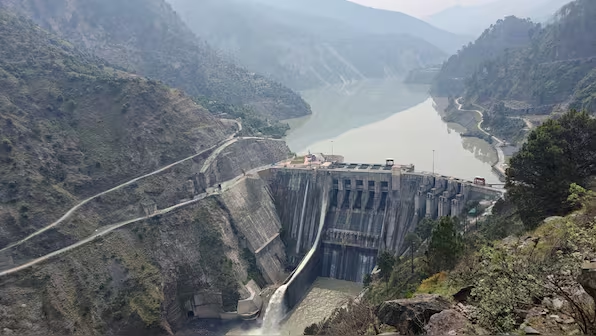
The moment you think about it from the Pakistani side, it hits hard. Those western rivers — the Indus, Jhelum, and Chenab — are everything for them. They water the farms that feed over 240 million people.
India’s Response After the Pahalgam Terror Attack
After the Pahalgam attack that killed tourists in Kashmir, India blamed Pakistan-linked militants and said enough is enough. They suspended the treaty until Pakistan stops supporting cross-border terrorism for good. Why keep giving water benefits to a neighbor you accuse of sending attackers? Indian officials like Home Minister Amit Shah have been clear — security first. They’re pushing ahead with their own projects on the rivers, building dams and links to use more of what they see as their rightful share, especially on the eastern rivers and limited uses on the western ones.
Understanding the Indus Waters Treaty
The treaty was always a compromise, brokered with the World Bank’s help back in the day. India controls the Ravi, Beas, and Sutlej mostly. Pakistan gets primary rights over the big western three, but India can do some non-consumptive stuff like power generation without hurting downstream flows too much. It held through 1965, 1971, Kargil — all that mess. But tying it to terrorism changed everything. India says you can’t separate water cooperation from stopping the violence. Pakistan calls the suspension illegal and has gone to international courts and the UN about it.
The Human Impact on Both Sides of the Border
The moment we step back and talk like normal people, not politicians, both sides have a point that stings. Indians are tired of living with the constant threat of attacks while being expected to share resources generously. Pakistanis feel like their lifeline is being squeezed as punishment, even as climate change makes glaciers melt unpredictably and populations boom. Farmers on both borders depend on these waters. Kids, villages, entire economies — it’s all connected.
War Threats and Escalating Rhetoric
Asif’s words come as tensions simmer. Pakistan says they’ll try diplomacy first but won’t sit idle if flows get choked. They’ve warned about striking structures if needed. India keeps moving forward with its plans and rejects outside rulings that try to force the old rules back. Nuclear neighbors talking war over dams and rivers? That’s the scary part. One misstep — a flood from sudden releases, a dry spell blamed on upstream control — and it could spiral fast.
Villages, Farmers, and Water Security at Risk
The moment we think about the human beings caught in the middle, it gets heartbreaking. Picture a village in Pakistan where the river runs thinner than usual. Women walking farther for water, crops dying in the fields, prices shooting up, tempers flaring. On the Indian side, frustration builds too — why hold back development in your own territory when you face real security threats? And looming over it all is climate reality: less predictable rains, growing demand, shared rivers that don’t respect borders.
Expert Concerns About the Future of Water Diplomacy
Experts who study these things say water treaties like this are supposed to prevent exactly this kind of weaponization. Yet here we are, over a year after the suspension, with rhetoric heating up again. Asif isn’t the first to say it, but his timing keeps the pressure on.
Can India and Pakistan Find Common Ground Again?
The moment we talk to each other honestly — Indians, Pakistanis, and everyone watching from afar — we know deep down that war solves nothing. It would wreck the very lands and lives both countries fight to protect. Rivers have flowed between these neighbors for ages. Finding a way back to some understanding, while dealing with the terror issue that started this latest round, feels like the only path that makes sense for the long haul. But with defence ministers drawing lines in the water, that path looks awfully narrow right now.
The Need for Dialogue Over Conflict
Ordinary folks on both sides just want to live without this constant shadow. Maybe the real pressure needs to come from us — pushing leaders to choose talks over trenches, because no one wins when the rivers run red or run dry.
Sources:
Business Today and Firstpost reports on Khawaja Asif’s June 2026 ARY News interview
Reuters, Deccan Herald, and other coverage of the Indus Waters Treaty suspension after the 2025 Pahalgam attack
Analyses from CFR, ISAS, and media on the ongoing diplomatic and humanitarian stakes.