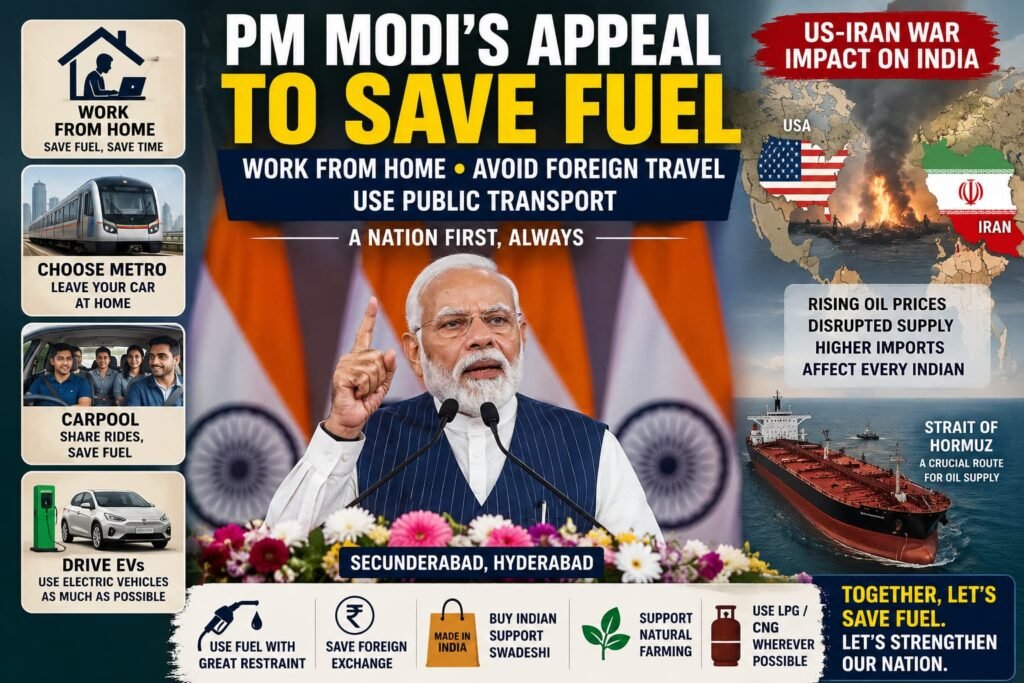
Prime Minister Narendra Modi stood in front of a crowd in Secunderabad, Hyderabad, and spoke straight from the heart about the tough times we’re facing because of the mess in West Asia. With the US-Iran conflict heating up and sending oil prices through the roof, he’s calling on every one of us – the middle-class family planning a vacation, the office-goer stuck in traffic – to tighten our belts and do our bit for the nation.
It feels a bit like those early COVID days all over again. Remember how we all suddenly started working from our dining tables and jumping on Zoom calls? Modi ji is asking us to bring some of that back, not because of a virus this time, but because every litre of petrol we save helps the country weather this global storm.
The Prime Minister didn’t mince words. He said the need of the hour is to use petrol, diesel, and cooking gas “with great restraint.” We import a huge chunk of our oil, and when fighting disrupts the Strait of Hormuz – that critical waterway for tankers – prices shoot up, supply gets shaky, and it hits our pockets hard. So, instead of just relying on government measures, he wants a people’s movement. Patriotism isn’t only about waving flags, he reminded us; it’s about living for the country too.
The Big Ask: Cut Down on Fuel
First and foremost, curb unnecessary use of petrol and diesel. Modi ji said we have to treat imported fuel like it’s precious – use it only when we really need to. He suggested practical things that are easy to follow:
Use Public Transport and Shared Mobility
- In cities lucky enough to have metro lines, make it your default choice. Leave the car at home whenever you can.
- If you must drive, try carpooling. Imagine four colleagues sharing one ride instead of four separate ones – that’s real saving right there.
- Those of you who’ve already switched to electric vehicles? Use them as much as possible. Push that green button more often.
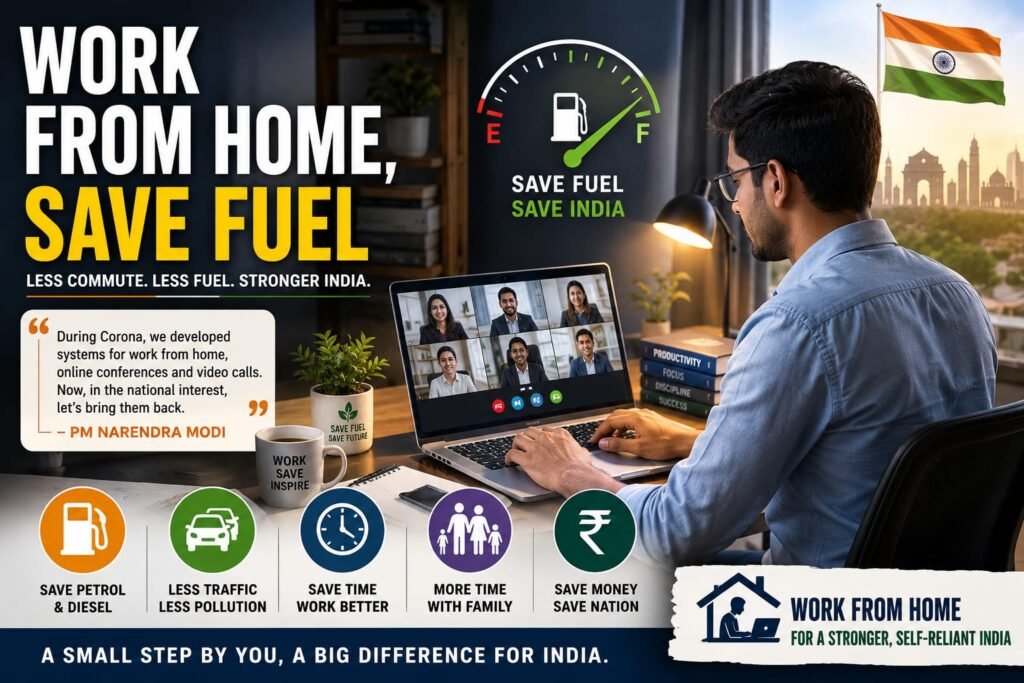
Bring Back Work-from-Home
He also talked about reviving the work-from-home culture we built during the pandemic. “During Corona, we developed systems for work from home, online conferences, and video calls, and we got used to them,” he said. Now, in the national interest, let’s bring them back. Prioritise WFH where it makes sense, do meetings virtually, skip the unnecessary office commutes. Think of the fuel saved, the time with family gained, and the stress on roads reduced. It’s a win all around.
Postpone That Foreign Trip
This one hit home for a lot of us. The PM directly addressed the growing trend among middle-class families – destination weddings abroad, foreign vacations, shopping trips. “We must decide that during this time of crisis, we should postpone travelling abroad for at least a year,” he urged.
After years of lockdowns and restrictions, people want to travel and celebrate big. But with foreign exchange reserves under pressure and oil prices volatile, every dollar or euro spent abroad adds to the burden. Modi ji linked it beautifully to saving foreign currency. He even suggested holding off on gold purchases for a year – another big drain on our forex.
He extended the same logic to other areas: reduce edible oil consumption if possible, support natural farming, buy Indian products, and promote swadeshi. Small changes at home can add up to something massive for the nation.
The Broader Picture: Energy Security and Self-Reliance
This wasn’t just a lecture on cutting back. Modi painted a bigger vision. He spoke about the government’s investments in solar power, ethanol blending in petrol, expanding LPG and piped gas, and pushing CNG. India has come a long way in reducing vulnerability, but global shocks like this war remind us we still have work to do.
He virtually inaugurated and laid foundation stones for projects worth around ₹9,400 crore in Telangana – roads, railways, a petroleum terminal, textile parks. It shows the government is pushing infrastructure hard even while asking citizens to conserve.
The context is serious. The US-Israel strikes on Iran have disrupted shipping, barbed insurance costs, and made crude supply uncertain. India, being a major importer, feels the heat through higher pump prices and potential inflation. But instead of panic, Modi’s message is one of calm, collective action. “Fight unitedly, keeping the country first,” he said.
How People Are Reacting
On social media, reactions are mixed but mostly thoughtful. Some call it timely and practical – “Finally, someone saying what we need to hear.” Others worry about the impact on travel and hospitality sectors or question if WFH is feasible for everyone. Office workers in metros are relieved at the thought of less commuting, while wedding planners are probably scrambling.
Farmers got a special message too: shift towards natural farming, cut chemical fertilisers by half where possible. It ties into self-reliance and reducing import dependence.
Why This Matters Now
Remember the oil crises of the 1970s or more recent spikes? They affect everything – transport costs go up, goods become expensive, inflation bites. By appealing directly to citizens, Modi is trying to create a buffer. Every carpool, every virtual meeting, every postponed foreign trip helps stabilise the situation.
It’s also a reminder of India’s position. We maintain diplomatic ties carefully, staying neutral where possible while securing our energy needs. Securing safe passage for LPG tankers shows quiet diplomacy at work.
What Can You Do Tomorrow?
Start small. Check if your office can allow more WFH days. Plan that next grocery run with neighbours. Book a metro ticket instead of Uber. Talk to family about celebrating that wedding closer to home this year. Buy local when you can.
Modi Ji’s Key Suggestions
Modi ji’s nine-point suggestions (as some reports summarised) boil down to mindful living:
- Save fuel
- Use public transport
- Go digital for work
- Conserve foreign exchange
- Delay foreign travel
- Avoid unnecessary gold purchases
- Support domestic products
- Reduce edible oil consumption
- Encourage natural farming
This isn’t about sacrifice for sacrifice’s sake. It’s about resilience. India has bounced back from tougher spots by coming together. Whether you agree with every policy or not, the call for personal responsibility in a global crisis feels honest and grounded.
As the situation in West Asia evolves, we’ll keep watching how fuel prices move and what more steps the government takes – subsidies, strategic reserves, alternative sourcing. But for now, the ball is partly in our court.
Sources:
Times of India reports on PM Modi’s speech in Secunderabad/Hyderabad, May 10, 2026
LiveMint coverage of fuel restraint and WFH appeal
Economic Times and other outlets summarising the nine suggestions amid West Asia crisis