New Delhi: The Election Commission has told the Supreme Court that every single order on the Special Intensive Revision of electoral rolls was cleared by all three members together. No one acted alone.
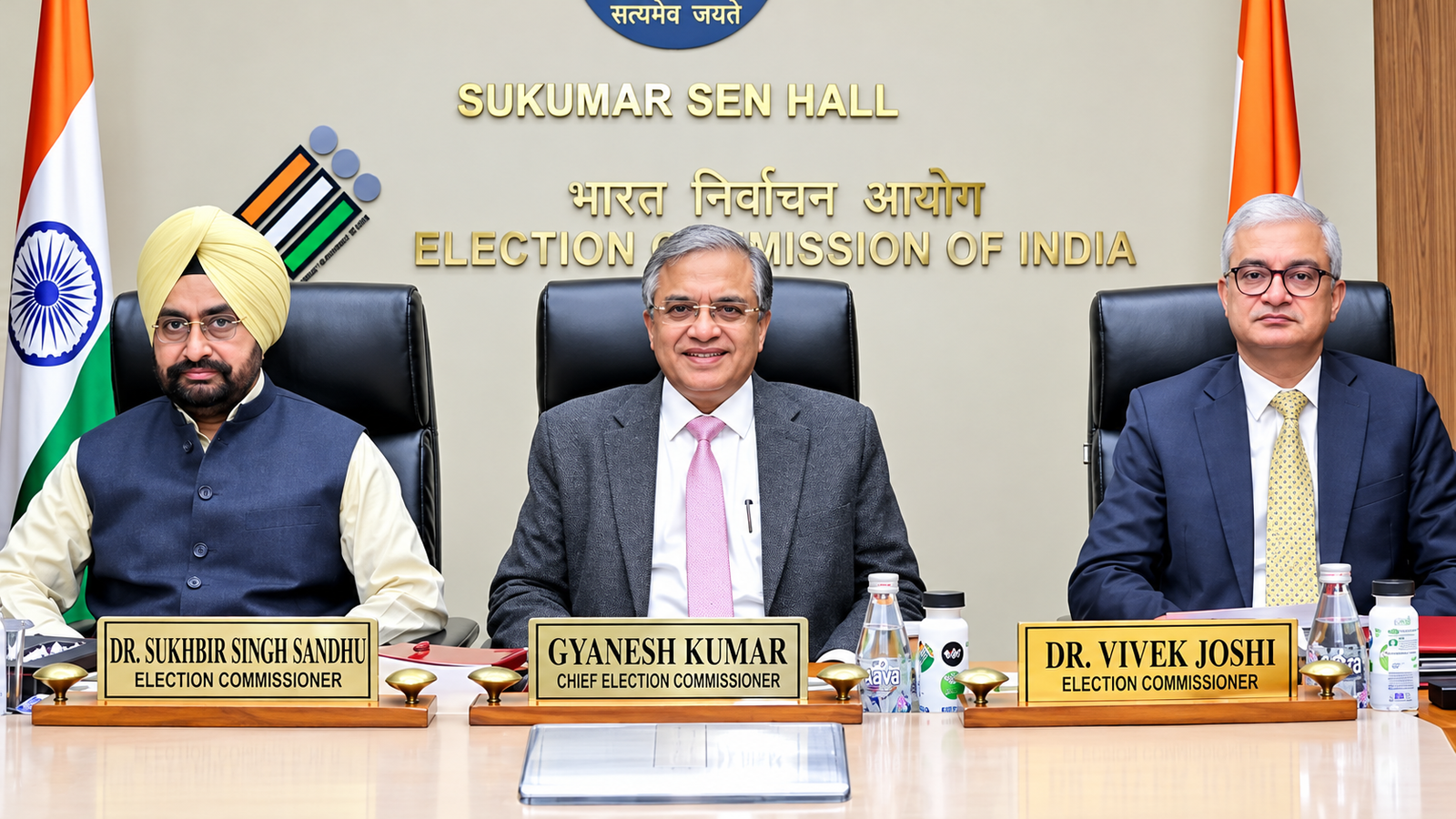
In an affidavit filed Monday, the Commission said the three main SIR orders — 24 June 2025, 27 October 2025 and 14 May 2026 — were issued only after full agreement among Chief Election Commissioner Gyanesh Kumar and the two Election Commissioners, Sukhbir Singh Sandhu and Vivek Joshi. The affidavit itself carries the same unanimous stamp. All three approved it before it went to court.
This comes against petitions that claim the CEC was taking decisions on his own and want him restrained. One petition is from activist Rakesh Kumar Singh. Others have come from Rahul Gandhi and several Opposition leaders. A bench led by Chief Justice Surya Kant is set to hear the matters today.
The Commission’s reply is simple. It says the whole case rests on one newspaper report and that newspaper stories about internal differences cannot be treated as evidence in court. Individual remarks, questions or notes written while a file is moving around are not final decisions, the affidavit makes clear. Files normally go first to one Election Commissioner, then the other, and only after that to the CEC. Urgent approvals can be taken on email and put on the file later, but the actual orders that get issued carry all three signatures.
On Form 6, the form people use to get their names added to the voter list, the Commission is firm. None of the SIR orders changed that form. Only the Central government can amend Form 6. What was adjusted was a separate declaration used just for the SIR exercise. Calling that a change to Form 6 is wrong, the Commission says.
It also confirms something that had come out earlier. The two Election Commissioners did write separately to Cabinet Secretary T.V. Somanathan about an internal work-allocation order. That order was issued by an Additional Secretary on deputation, was never put into effect, and was stopped after the two commissioners issued a joint direction.
The Commission maintains the SIR itself is legal and was done the right way. It points to the Supreme Court’s own order of 27 May this year that upheld the exercise in Bihar. Eligible people still have the chance to enrol. In most cases Booth Level Officers will collect papers from homes. Hearings will be rare and preferably online. No name can be added or removed on the system without a proper order from the Electoral Registration Officer.
The Commission also says any request to stop the CEC from working is not maintainable. Three members are there so that if they disagree, a majority can decide under the 2023 law. Decisions are supposed to be unanimous when possible. Freezing one member because of newspaper reports would go against that system.
The SIR has been under fire for months over large deletions and questions about how new voters were added. The Commission’s stand in court is that the key orders were collective, the process stayed within the rules, and genuine voters still have the door open.
Whether the court accepts this explanation will be clear once the hearing begins. For now the Election Commission has put its position on record in plain terms: the three SIR orders were unanimous, Form 6 was not rewritten by them, and the decision-making stayed inside the framework meant for a three-member body.
Sources: Election Commission affidavit in the Supreme Court; The Indian Express, The Tribune, LiveLaw, Economic Times, India Today, PTI reports.
@Rohit Manral