Understanding China Beyond Just the Border
Your two houses, fixing the little cracks and trying to keep things civil. But the fellow next door? He’s thinking about the whole lane, the main road leading in and out, who’s friends with whom in the bigger town down the way, and even what the weather’s going to be like next season. That’s basically the story Vijay Gokhale tells about India and China.
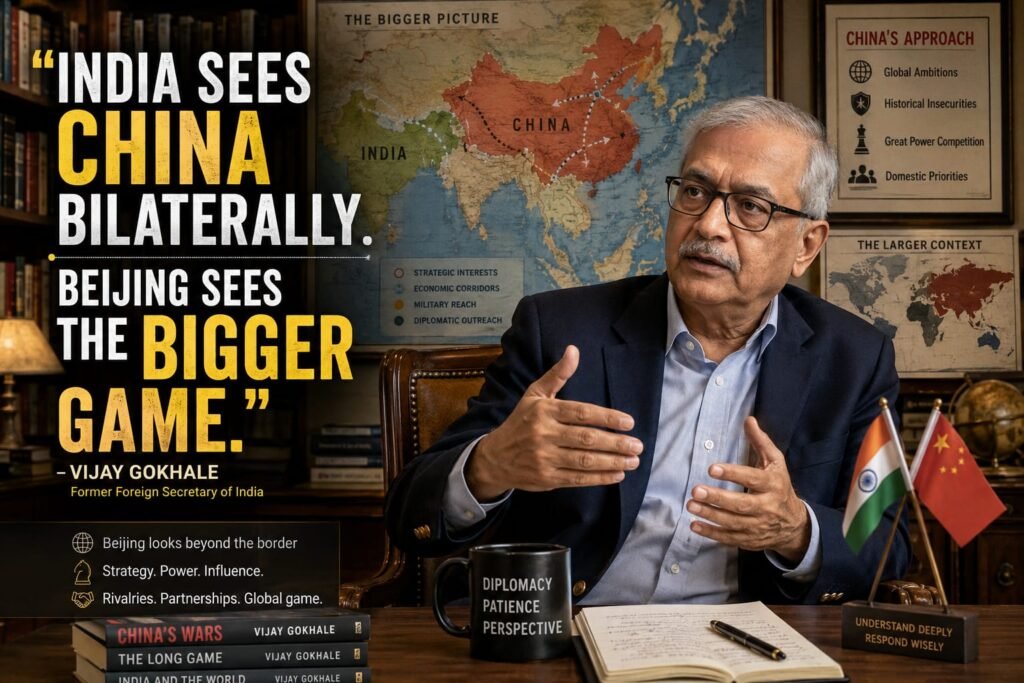
“We tend to see India-China relations only in a bilateral context,” he said to me the other day. “Beijing has never looked at it that way, and will never look at it that way either.”
The book’s called China’s Wars: The Politics and Diplomacy Behind its Military Coercion. At 67, Gokhale has this easy, thoughtful way of speaking – no grand speeches, just the kind of calm honesty you get from someone who’s spent nearly forty years in the Indian Foreign Service, including as our Ambassador to China and later as Foreign Secretary. We sat in his study, surrounded by books, and it felt more like a regular chat over chai than anything formal.
China’s Bigger Strategic Picture
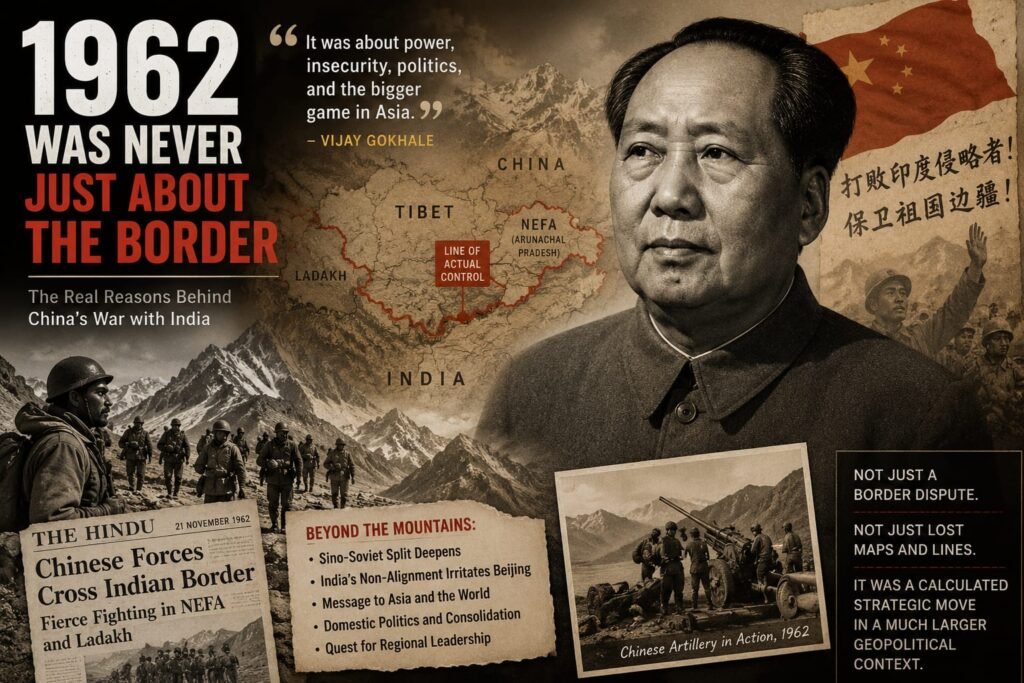
The book really makes you pause. Gokhale looks at how China has used military pressure and force since 1949 – the old wars as well as the constant smaller pushes we’re living with now on the border. The big thing he keeps coming back to is that Beijing hardly ever acts for just one straightforward reason. Everything connects to a larger picture: how China sees its place in the world, its old fears and insecurities, its competition with other big powers, and what’s happening inside its own system.
The 1962 War and Mao’s Thinking
Take 1962. For us, it’s still that sad chapter – the border trouble, the shock after all the “Hindi-Chini bhai-bhai” talk. And yes, those things counted. But for Mao Zedong and the people around him, Gokhale explains, it was never only about the mountains or the lines on the map. China was feeling cornered back then. The big split with the Soviet Union was getting deeper, India looked too comfortable with both superpowers, and a strong move against us also sent a loud message across Asia while helping sort out some politics back home. It was all tangled up together.
China’s Pattern of Pressure
He shows the same pattern in other fights – the trouble around Taiwan, the clashes with the Soviets in 1969, the war with Vietnam in 1979. After that last one, China moved away from big open wars. But peace didn’t really arrive. What we got instead is this grey-zone way of doing things: moving soldiers around, slowly building up infrastructure, using trade and money as pressure, putting out their own stories. It keeps the other side worn out and uncertain without crossing into full fighting.
The Galwan Turning Point
Five years after that terrible night in Galwan Valley in 2020, this is where we find ourselves. Things are in a kind of armed but uneasy balance. Some areas along the Line of Actual Control have seen troops step back a little, but the easy trust from before? That’s finished. The old approach we had since Rajiv Gandhi’s visit to China in 1988 – put differences aside and grow trade and contacts – pretty much fell apart in the Galwan Valley.
India’s Response After 2020
India has tried to respond sensibly. We’ve become more careful about Chinese investments, pushed harder to make our own things in defence and technology, strengthened our presence on the border, and built closer friendships with the US, the Quad countries, Europe and others. To us it just feels like looking after our own house. But Beijing often reads it differently – as India joining America’s side in their bigger contest. That gap in understanding keeps things difficult.
China’s Long-Term View of India
Gokhale has pointed this out for years now. Right from 1949, China has seen India not quite as an equal partner standing on its own, but always through the lens of its own larger friendships and rivalries. Jawaharlal Nehru hoped for Asian togetherness. Mao’s China wanted to lead. They got close to Pakistan to balance us. Even today, they don’t want India becoming strong enough to really get in the way of their plans.
They use time, make small advances, stay firm but sometimes show just enough give to keep conversations from totally breaking. Inside their system, outside problems can sometimes help their leaders bring people together at home. It’s not always easy for outsiders to read the signals right.
Gokhale’s Advice for India
Gokhale isn’t someone who wants us fighting all the time. He’s practical. China’s economy is still much larger, no doubt about it. But India has its own good cards – our young people, our growing economy, our democracy. He thinks we should keep building real strength in every area: military, economy, technology. At the same time, keep some doors open for serious talks at the top level, make our red lines clear, and look for any places where our interests might line up.
A Relationship on Pause
Both sides know the world is shifting these days. How China handles its contest with America will affect us too. Our task is to become important enough – in every way – that they can’t simply push us aside or keep pressuring us.
The border stays tense but hasn’t blown up again. Trade continues, though we watch it more closely. Meetings between ordinary people are still quite limited. The whole relationship feels cautious, careful, almost on pause. No big breakthroughs, but at least no return to the worst days of 2020.
Final Thoughts
The dreamy hopes from the early years brought hard lessons. Really understanding China means trying to see the deeper things that move them – their history, their worries, their big dreams – not just the polite things said in meetings.
In the end, the elephant and the dragon have to live next to each other. How we manage this complicated relationship, with smart competition, careful handling of problems, and quiet building of our own strength, is going to shape our future and a big part of Asia’s story too.
Sources:
- China’s Wars: The Politics and Diplomacy Behind its Military Coercion (Simon & Schuster India, May 2026)
- Recent conversations and interviews with Vijay Gokhale, May 2026
- His earlier books like The Long Game: How the Chinese Negotiate with India and writings for Carnegie Endowment for International Peace
- Public records from his time as Ambassador to China and Foreign Secretary